
St. Edmund’s College team develops biodegradable film from kitchen waste to tackle plastic pollution
ROOPAK GOSWAMI
SHILLONG, May 24: What usually ends up in the dustbin may soon help fight plastic pollution. Researchers at St. Edmund’s College, Shillong, have developed a biodegradable plastic film using banana peels that naturally decomposes in soil within weeks.
The study explored how discarded banana peels can be converted into starch-based bioplastic as a sustainable alternative to conventional petroleum-based plastics, which continue to threaten both terrestrial and aquatic ecosystems.
Plastic pollution has emerged as a major environmental challenge, affecting soil health, biodiversity, aquatic organisms and ecological balance. The researchers noted that conventional plastics are neither easily degradable nor reusable and continue to accumulate in rivers, oceans and landfills, posing long-term environmental risks.
The study highlighted the urgent need for biodegradable, eco-friendly alternatives that support the Sustainable Development Goals (SDG 12: Responsible Consumption and Production and SDG 15: Life on Land). According to the researchers, bioplastics made from renewable and degradable resources could significantly reduce the environmental footprint of conventional plastics.
“This research is a small step towards promoting green innovation and encouraging responsible waste management for a cleaner environment,” the team noted.
The research focused on utilising starch extracted from banana peels (Musa acuminata) to produce biodegradable plastic. The researchers said plant-based bioplastics offer a low-cost and environmentally friendly alternative by reducing dependence on fossil-fuel-derived materials while minimising adverse impacts on terrestrial and aquatic ecosystems.
“We wanted to show that even everyday kitchen waste like banana peels can become part of an eco-friendly solution to reduce and beat plastic pollution,” said the research team from the Department of Zoology, St. Edmund’s College.
The research was carried out by Ibameaishisha Suting, Tanisha Tangjang, Hibu Kalung, Caffy Dyana Nongdhar and Mewanshngain Kharumnuid from the Department of Zoology, St. Edmund’s College.
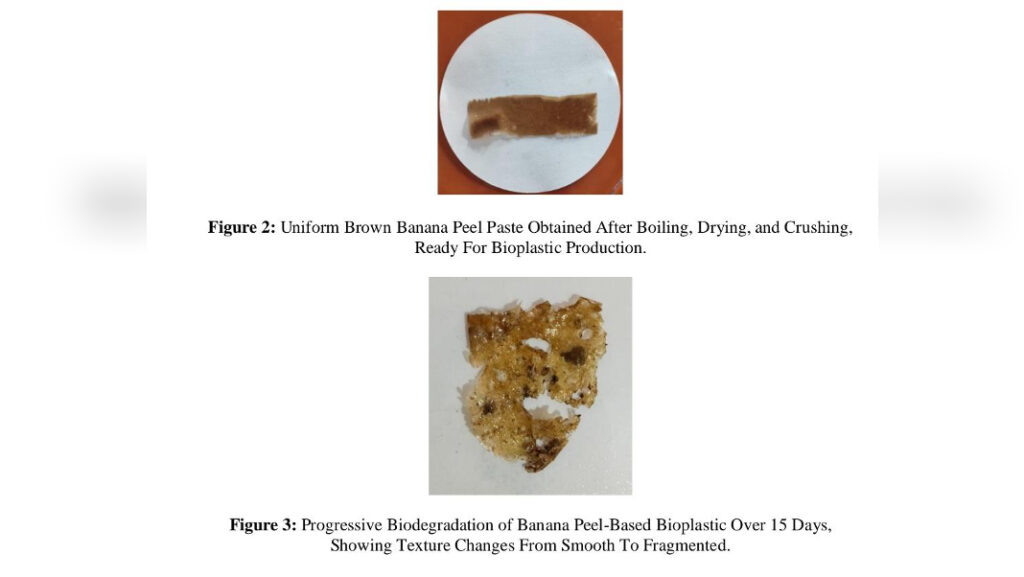
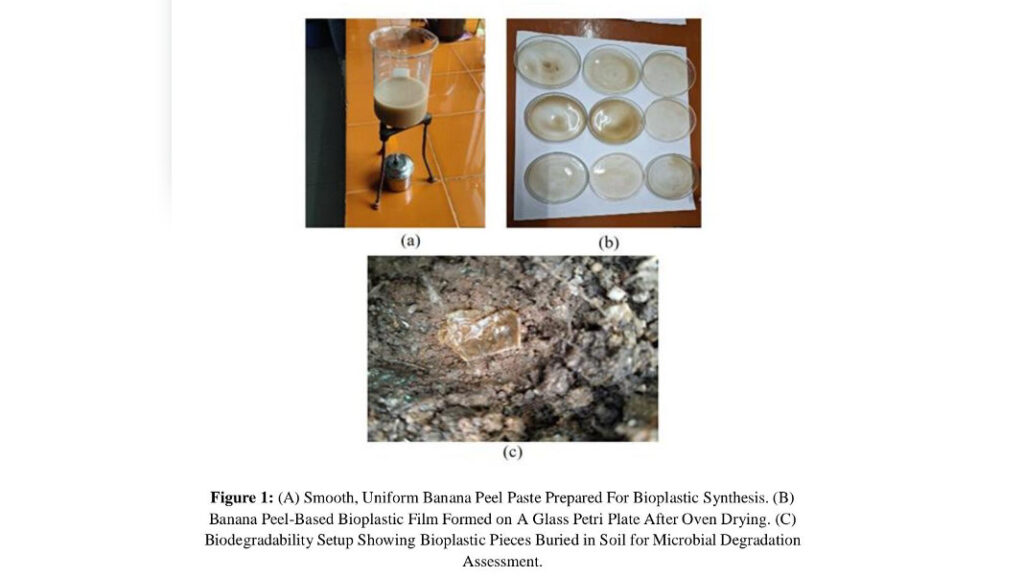
As part of the experiment, banana peels were boiled, dried and crushed into a smooth paste before being processed into bioplastic using hydrochloric acid, glycerol and sodium hydroxide. The material was then oven-dried to form thin biodegradable films.
To test its environmental viability, the team buried pieces of the bioplastic in soil and monitored them for 15 days. The material gradually softened, became brittle and eventually fragmented due to microbial activity, demonstrating rapid biodegradation. Researchers recorded more than 27 per cent weight loss during the test period.
The study also examined the material’s swelling and solubility properties. While the bioplastic absorbed water and softened slightly, it remained comparatively stable in solvents such as chloroform and methanol, indicating structural resilience under certain conditions.
The researchers said banana peel-based bioplastics could emerge as a sustainable alternative to single-use plastics as countries search for greener solutions to tackle mounting plastic waste.
The team has recommended further studies to improve the material’s strength and water resistance, making it suitable for larger-scale practical applications.