
Colour-coded ‘Husiar Ko Kmie’ tool turns every home into an early warning system for high-risk pregnancies in Ri-Bhoi.
ROOPAK GOSWAMI
SHILLONG, July 6: In the hilly villages of Meghalaya’s Ri-Bhoi district, a simple sticker pasted on a family’s front door is emerging as an unlikely but powerful weapon against maternal deaths.
The ‘Husiar Ko Kmie’ (Be Alert, Mother) sticker, introduced under the Maternal, Newborn and Child Health-Human Centred Design (MNCH-HCD) Project, is helping Accredited Social Health Activists (ASHAs) identify high-risk pregnancies early and ensure families respond quickly when complications arise.
The initiative is currently being implemented in the Umling Block of Ri-Bhoi district.
During routine antenatal care (ANC) visits, ASHAs assess pregnant women and mark a colour-coded risk band on the sticker before placing it prominently on a door or wall inside the house. The sticker tells family members whether the pregnancy requires a routine check-up, signals a warning, or is a medical emergency, while also displaying whom to contact immediately, including the ASHA worker, the 108 ambulance service or the Chief Minister’s Safe Motherhood Scheme (CM-SMS).
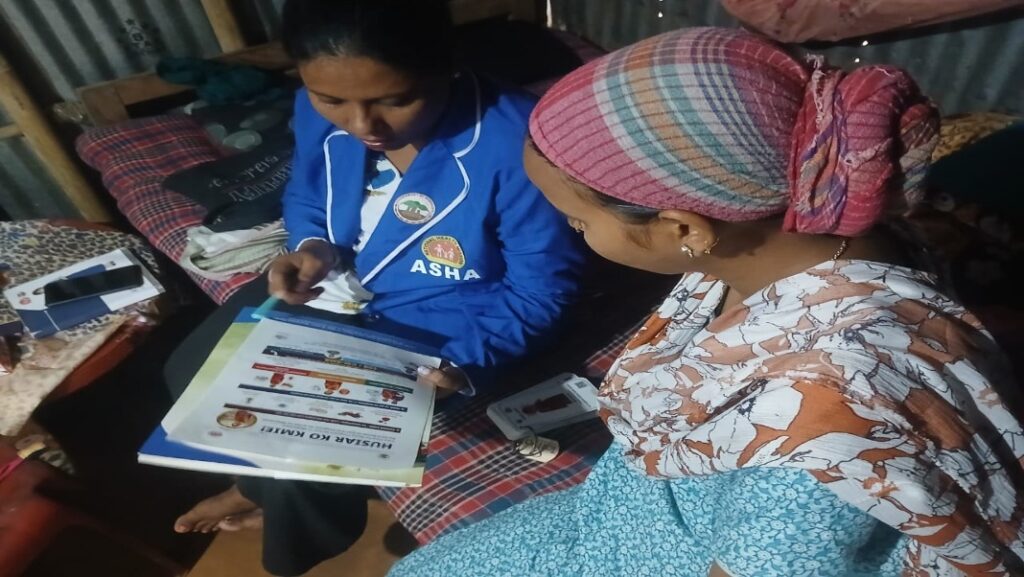
The sticker also doubles as a stand-alone danger-sign card. It lists specific warning symptoms directly on it – heavy bleeding, fits or convulsions, no foetal movement, blurred vision and high fever – so that even in the ASHA’s absence, family members can recognise an emergency and know to act immediately, rather than waiting for a health worker to explain what is wrong.
Health officials say the innovation is particularly useful in Meghalaya’s remote and hilly terrain, where delays in recognising danger signs or reaching healthcare facilities can prove fatal.
By placing vital information in a location families see every day, the sticker is making danger signs easier to understand, reducing delays in seeking treatment during emergencies, strengthening trust between ASHAs and households, and reinforcing referral systems in difficult-to-reach areas.
Unlike conventional health records that remain in registers or files, the sticker keeps life-saving information in full public view inside the home, encouraging families to act promptly when warning signs appear.
Designed to work even where literacy levels vary, the sticker uses a bilingual Khasi-English format built around simple icons and colour cues rather than dense text – allowing every member of the household, not just the primary caregiver, to read and respond to it correctly.
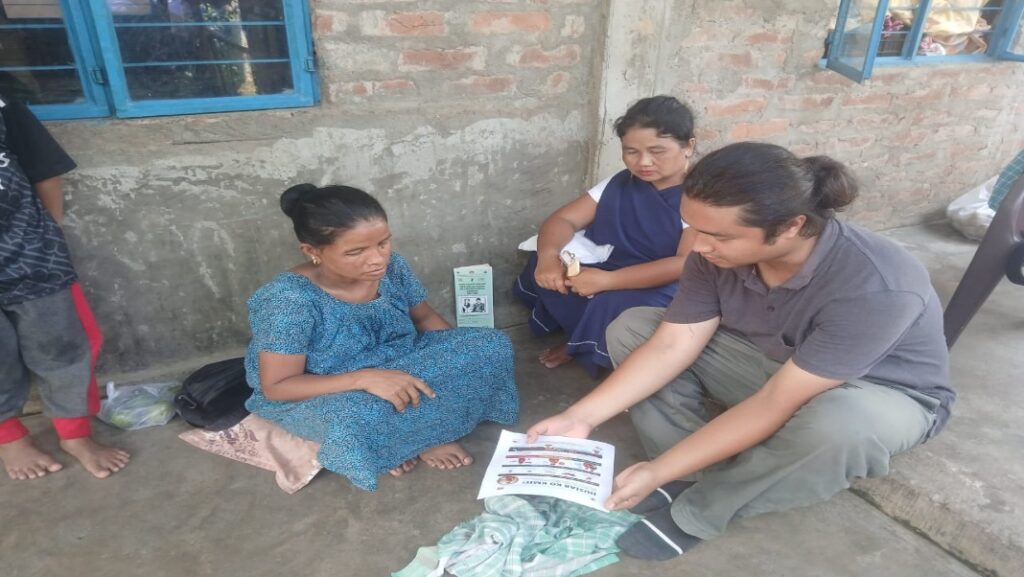
The intervention was developed using a Human-Centred Design (HCD) approach, with inputs from frontline health workers, community members and the State Health Systems Resource Centre (SHSRC), Meghalaya, ensuring it is practical and easy for rural families to use.
The project is supported by the Government of Meghalaya, SHSRC Meghalaya, Blockchain for Impact (BFI), IHCRF and UNICEF India. It is being implemented by the Tattva Foundation in collaboration with NHM Meghalaya, with academic support from Assam Don Bosco University, Guwahati, and the Indian Institute of Technology Bombay.
Health officials believe the low-cost innovation demonstrates how a simple visual reminder, placed where family decisions are made, can help save the lives of mothers and newborns.