
15-foot statues of Bormanik Syiem and Sngap Sing Syiem unveiled on U Tirot Sing’s death anniversary to spotlight their role in the Anglo-Khasi Wars.
Shillong, July 17: In an effort to restore two overlooked figures of the Khasi resistance to public memory, the Hynniewtrep Youths’ Council (HYC) on Friday unveiled towering statues of Bormanik Syiem of Hima Shyllong and Sngap Sing Syiem of Hima Maram at Nongthliew.
The two 15-foot monuments, unveiled on the 191st death anniversary of U Tirot Sing Syiem and the HYC’s foundation day, commemorate the chiefs’ role in resisting British colonial expansion during the Anglo-Khasi Wars.
The HYC said the memorial aims to recognise the contributions of the two leaders, whose role in the Khasi freedom struggle has received little attention despite their participation in the armed resistance against the British East India Company.
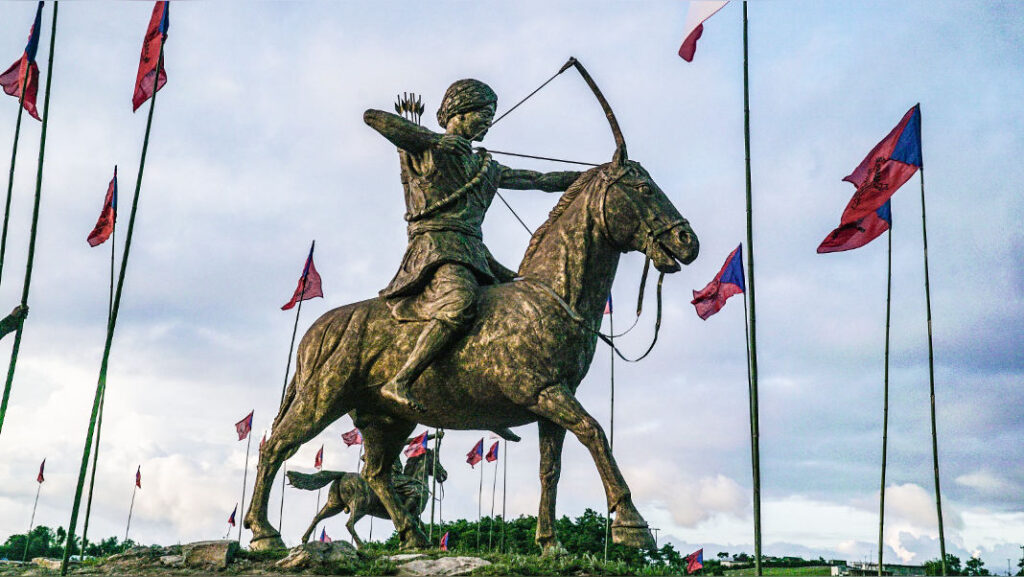
The statue of Sngap Sing Syiem was unveiled by Niandro Syiemiong, Syiem of Hima Maram, while Habapan Sing Syiem, Deputy Syiem of Hima Khyrim, unveiled the statue of Bormanik Syiem. Traditional leaders, social organisations and representatives from Khasi, Jaintia and Garo Hills attended the ceremony.
HYC president Roy Kupar Synrem said the memorial was intended to ensure that the sacrifices of the Khasi chiefs are remembered by future generations.
The heritage enclave, featuring the statues of Bormanik Syiem, Sngap Sing Syiem and an existing monument of U Tirot Sing Syiem, is being described by the organisers as one of the largest memorials dedicated to Khasi resistance fighters in the state.
The monuments were designed and sculpted by local artists of the Riti Academy, led by chief creative director Raphael Warjri, following extensive historical research carried out by the academy’s documentation team.
According to historians, Bormanik Syiem emerged as one of the earliest Khasi leaders to challenge British authority in 1828 by opposing colonial revenue collection in the Dimurua area bordering Assam. Working alongside U Tirot Sing, he helped organise military resistance that culminated in the First Anglo-Khasi War (1829-1833).
After Tirot Sing’s capture and exile, Sngap Sing Syiem continued the armed struggle during the Second Anglo-Khasi War (1835-1839). From his stronghold at Nongnah, he led a prolonged guerrilla campaign against British forces before being captured following an alleged betrayal. He was later granted amnesty and continued as Syiem of Hima Maram until his death in 1846.
The HYC said the memorial is intended not only to honour the three Khasi resistance leaders but also to encourage greater recognition of Meghalaya’s indigenous freedom fighters in the broader narrative of India’s anti-colonial struggle.


 on Friday unveiled towering statues of Bormanik Syiem of Hima Shyllong and Sngap Sing Syiem of Hima Maram at Nongthliew.)